
 Contact
 Account
What Is Tractor Hydraulic Fluid?

Introduction
Tractor hydraulic fluid is a specialized oil used to transfer power, lubricate moving parts, reduce wear, control heat, and protect hydraulic components in tractors and other farm equipment. In many machines, it does more than standard hydraulic oil because it may also serve transmissions, wet brakes, clutches, final drives, and power steering systems, depending on the equipment design.
If you have ever wondered, “What is tractor hydraulic fluid used for beyond lifting implements?” the answer is: it helps the tractor’s hydraulic and drivetrain systems work smoothly under load. Choosing the right fluid matters because the wrong product can cause poor performance, noisy operation, seal damage, brake chatter, or premature component wear.
What is tractor hydraulic fluid?
Tractor hydraulic fluid is an engineered fluid designed for hydraulic power systems and, in many tractors, shared sump systems where one fluid supports multiple functions. It carries pressure from the hydraulic pump to cylinders, valves, steering systems, loaders, three-point hitches, and other attachments that need controlled movement.
Unlike a simple lubricant, tractor hydraulic fluid must flow well, resist foaming, protect against rust, handle heat, and maintain the correct friction characteristics for components such as wet brakes and clutches. That is why many tractor fluids are labeled as universal tractor transmission oil, hydraulic/transmission fluid, or tractor hydraulic oil. These products are not automatically interchangeable, so the correct specification in the owner’s manual should always guide selection.
A good way to understand the fluid is to think of it as both a power carrier and a protector. It moves force through the hydraulic system, but it also forms a lubricating film between metal surfaces. Without the right fluid, a tractor may still run, but its hydraulic response, shifting feel, braking smoothness, and long-term reliability can suffer.
Defining characteristics of tractor hydraulic fluid
Tractor hydraulic fluid is built around a balance of performance properties. Each property supports a specific job inside the machine, especially when the tractor works in heat, cold, mud, dust, or long duty cycles.
Key characteristics include:
- Hydraulic power transfer: The fluid must transmit pressure efficiently so loaders, remotes, steering, and hitches respond predictably.
- Lubrication: It reduces friction in pumps, gears, bearings, valves, and other moving surfaces.
- Wear protection: Anti-wear additives help protect metal parts under high pressure and heavy loads.
- Correct friction behavior: Fluids made for wet brakes and clutches help prevent chatter, slipping, grabbing, or harsh engagement.
- Oxidation resistance: The fluid should resist breakdown as it is exposed to heat and oxygen.
- Foam control: Anti-foam properties help maintain consistent hydraulic pressure and reduce spongy operation.
- Rust and corrosion protection: Additives help protect internal parts from moisture-related damage.
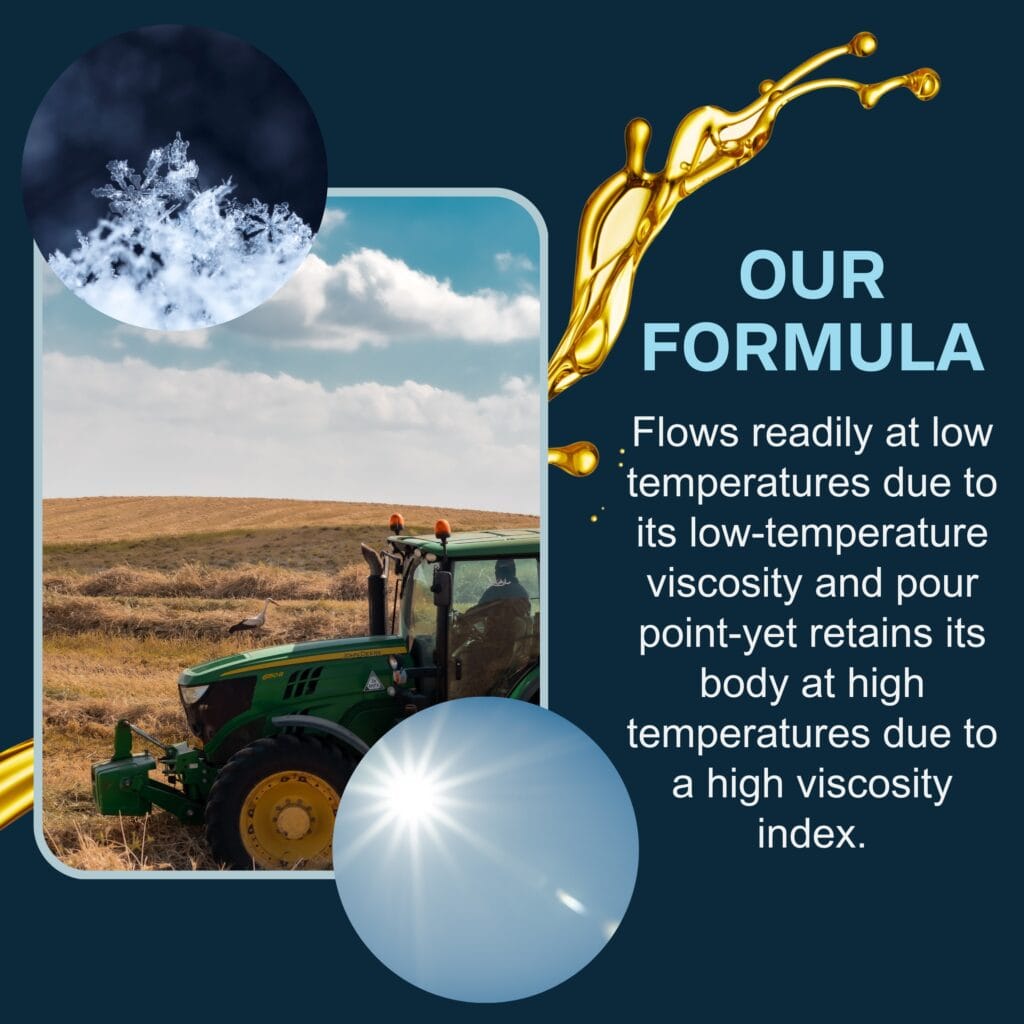
- Cold-flow performance: The fluid must move through pumps and valves at startup, especially in colder climates.
These characteristics explain why tractor hydraulic fluid should not be chosen only by viscosity or price. A fluid can look similar to another oil and still lack the additive package required for a specific tractor system.
How does tractor hydraulic fluid work?
Tractor hydraulic fluid works by being pressurized by a pump and directed through valves to perform mechanical work. When the operator moves a control lever, the valve routes pressurized fluid to a cylinder or hydraulic motor. That pressure creates motion, such as raising a loader, angling a blade, steering the front wheels, or lifting a three-point implement.
At the same time, the fluid returns through the system, carrying heat away from working parts and passing through filters that remove contaminants. In tractors with shared reservoirs, the same fluid may also bathe gears, clutch packs, brake discs, and bearings. This is why contamination, low fluid level, or incorrect fluid can affect several systems at once.
The process depends on clean, stable fluid. If air enters the system, the hydraulic response may feel jerky or weak. If water contaminates the reservoir, the fluid may turn cloudy and lose some protective ability. If the fluid breaks down from age, heat, or heavy use, it may no longer lubricate or control friction properly.
Tractor hydraulic fluid and tractor hydraulic oil
The terms tractor hydraulic fluid and tractor hydraulic oil are often used casually, but they do not always mean the same thing. “Hydraulic oil” can describe a broad category of fluids used in hydraulic systems, including industrial hydraulic oils that are not made for tractors. “Tractor hydraulic fluid” usually refers to a product formulated for agricultural equipment, often with additives for transmissions, wet brakes, and wet clutches.
This distinction matters when a tractor uses a common sump. An industrial hydraulic oil may move a cylinder, but it may not provide the proper friction performance for wet brakes or the right protection for transmission components. Likewise, an older tractor may require a different type of fluid than a newer model with more demanding hydraulic and drivetrain requirements.
When comparing products, look beyond the front label. Check whether the fluid meets the manufacturer’s listed specification or service requirement. A product marketed as tractor hydraulic oil may be suitable for many machines, but the manual is still the best source for the exact type required.
What color is tractor hydraulic fluid?
Fresh tractor hydraulic fluid is commonly amber, golden, or light brown, though the exact color depends on the formulation, dye, and manufacturer. Some products may appear clearer or darker right out of the container, so color alone should not be used to decide whether a fluid is correct for your tractor.
Color is more useful as a condition clue after the fluid has been in service. Healthy fluid often remains relatively clear and consistent, while contaminated or degraded fluid may look milky, unusually dark, gritty, or foamy. A milky appearance often suggests water contamination, while a burnt smell or very dark color can suggest overheating or oxidation.
Common color observations include:
- Clear amber or golden: Often normal for new or clean fluid.
- Light brown: May be normal, depending on the product and service time.
- Milky or cloudy: Possible water contamination or condensation.
- Very dark or burnt-smelling: Possible heat damage, oxidation, or extended service.
- Foamy: Possible air entry, overfilling, wrong fluid, or suction-side issues.
- Gritty or dirty: Possible contamination and a sign to inspect filters and service condition.
If you are asking “what color is tractor hydraulic fluid?” because you are checking a sight glass, dipstick, or drained oil, use color as one signal, not the final diagnosis. Fluid level, smell, texture, operating symptoms, maintenance history, and the tractor’s service interval all matter.
What tractor hydraulic fluid includes and excludes
Tractor hydraulic fluid typically includes base oil plus additives selected for protection and performance. The base oil provides the main lubricating body, while additives fine-tune how the fluid handles pressure, temperature, friction, corrosion, foam, and wear.
It generally includes:
- Base oil that provides lubrication and fluid flow.
- Anti-wear additives that protect pumps, gears, and metal surfaces.
- Friction modifiers for wet brakes, clutches, and smooth engagement where required.
- Anti-foam agents to reduce bubbles and inconsistent hydraulic action.
- Rust and corrosion inhibitors to protect internal parts.
- Oxidation inhibitors to slow breakdown under heat.
- Viscosity-control properties that help the fluid perform across operating temperatures.
It does not automatically include every property needed for every tractor. Some fluids are designed for specific equipment families or service levels. Others are general-purpose products intended for a range of agricultural machines. This is why using “whatever hydraulic oil is available” can be risky, especially in machines with shared hydraulic, transmission, and brake systems.
Practical examples and common misconceptions
Tractor hydraulic fluid shows up in everyday jobs that place steady demand on a machine. The right fluid helps those jobs feel controlled instead of sluggish, noisy, or inconsistent.
Practical examples include:
- Loader work: The fluid transfers pressure to raise, lower, curl, and dump the bucket.
- Three-point hitch operation: It allows implements to lift and hold position under load.
- Remote hydraulic valves: It powers cylinders on equipment such as mowers, balers, blades, and wagons.
- Power steering: In many tractors, hydraulic fluid supports easier steering response.
- Wet brake systems: The right fluid helps brakes operate smoothly and quietly.
- Transmission lubrication: In shared systems, the same fluid may protect gears and bearings.
Common misconceptions can lead to expensive mistakes. One is assuming all hydraulic oils are the same. They are not, because a tractor may need friction control and transmission protection that ordinary hydraulic oil may not provide. Another misconception is that darker fluid always means immediate failure. Darkening can happen with use, but a burnt smell, visible contamination, foam, or performance changes deserve attention. A third misconception is that topping off with a “close enough” fluid is harmless. Mixing incompatible or incorrect fluids can change friction behavior and additive performance.
Choosing the right fluid for a tractor
The safest way to choose tractor hydraulic fluid is to start with the owner’s manual or the service information for the exact make and model. The manual should list the required fluid type, specification, viscosity guidance, and service interval. If the tractor is older, has unknown service history, or uses implements that share hydraulic connections, extra care is worthwhile.
Before buying or adding fluid, check:
- The manufacturer’s required specification, not just the general product name.
- Whether the tractor uses a shared sump for hydraulics, transmission, brakes, and clutches.
- Climate and operating conditions, especially cold starts or high-heat heavy work.
- Current fluid condition, including color, smell, foam, and visible contamination.
- Filter service history, because new fluid cannot perform well through a clogged or neglected filter.
- Compatibility when topping off, especially if the existing fluid type is unknown.
If the current fluid type is uncertain, it may be better to drain, replace filters, and refill with the correct product rather than repeatedly topping off with unknown oils. For equipment under warranty or specialized service requirements, following the manufacturer’s specification is especially important.
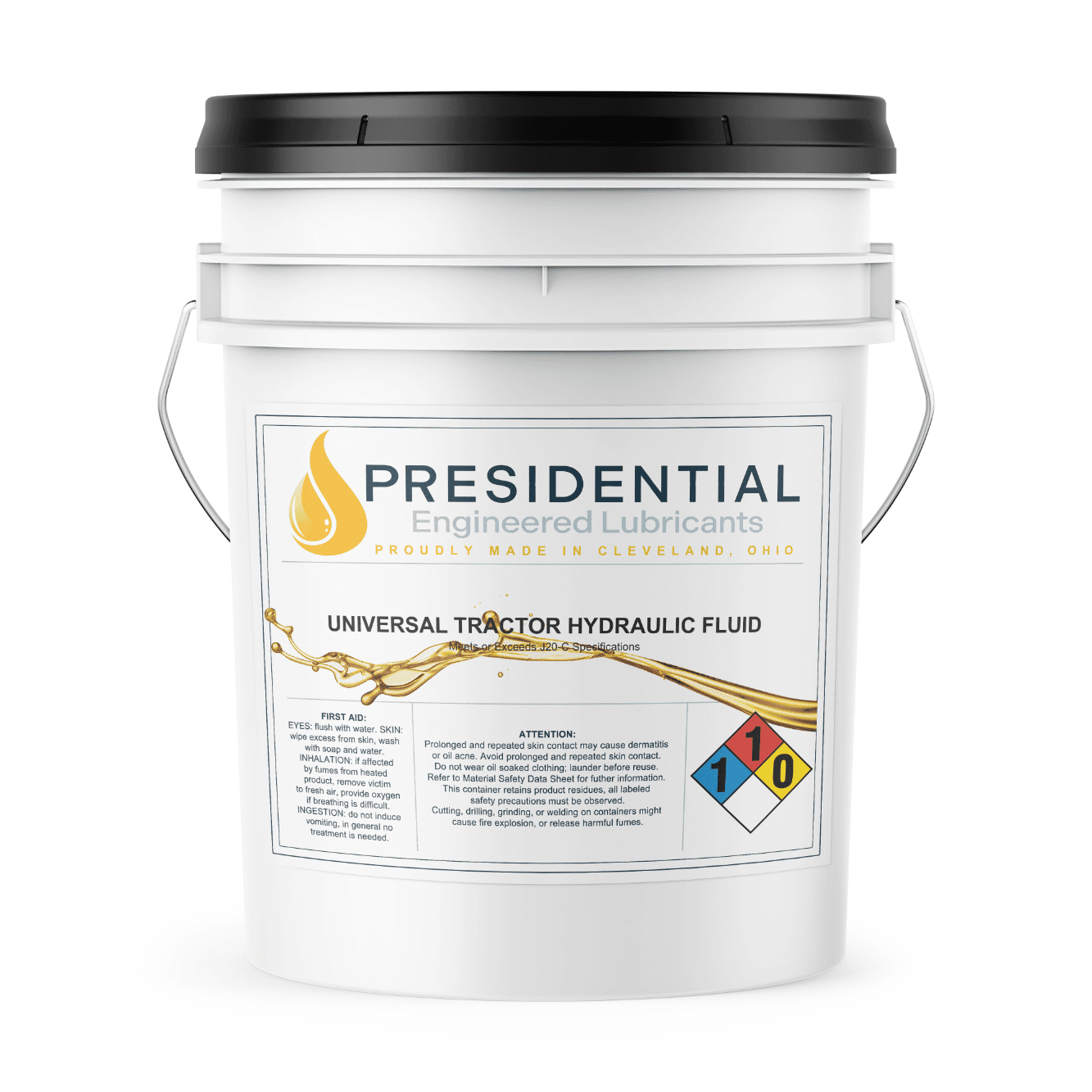



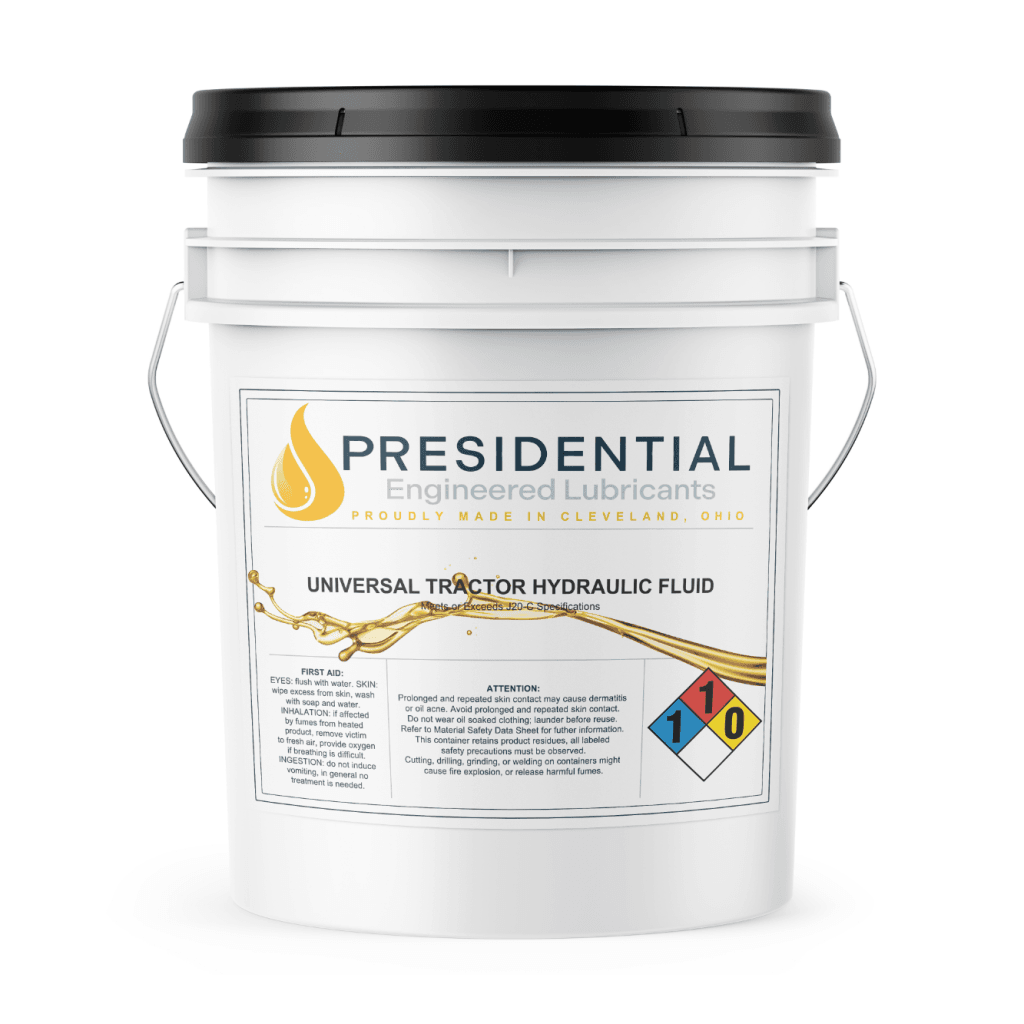
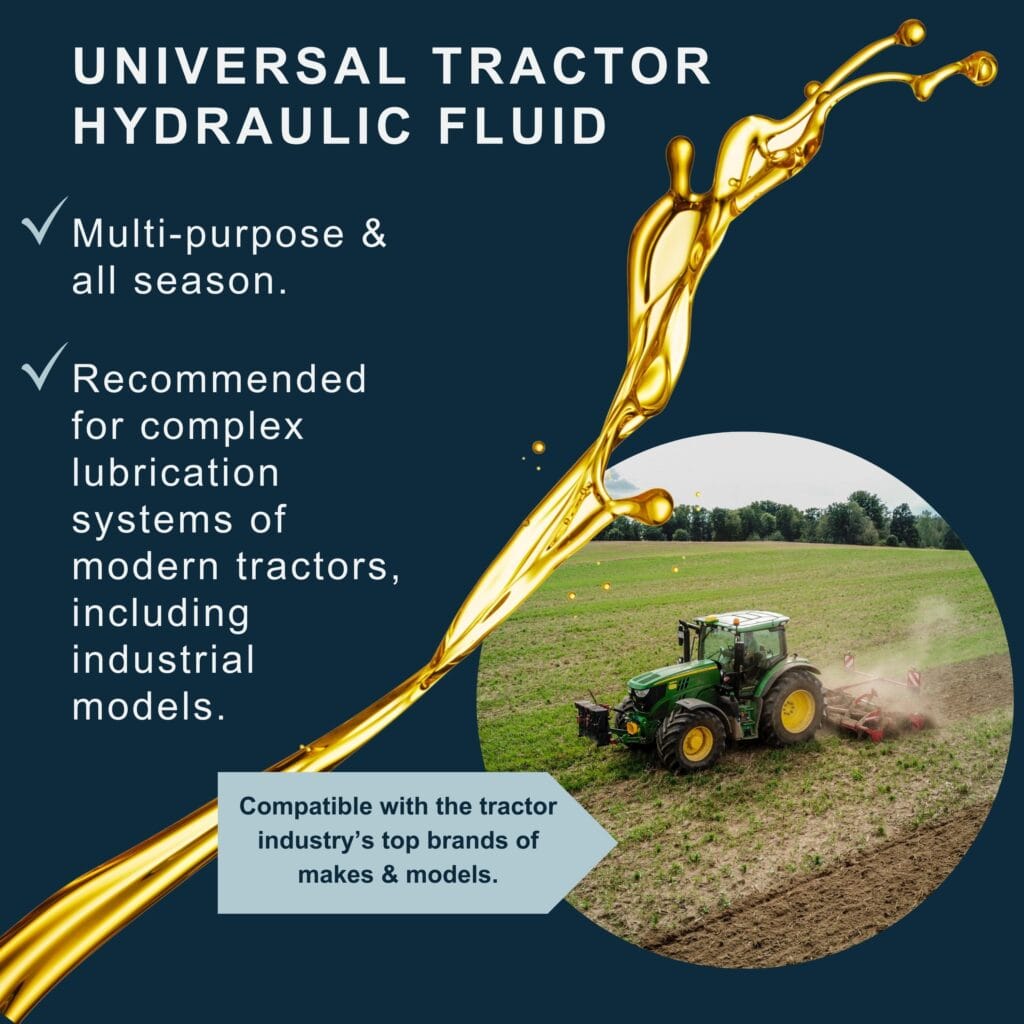


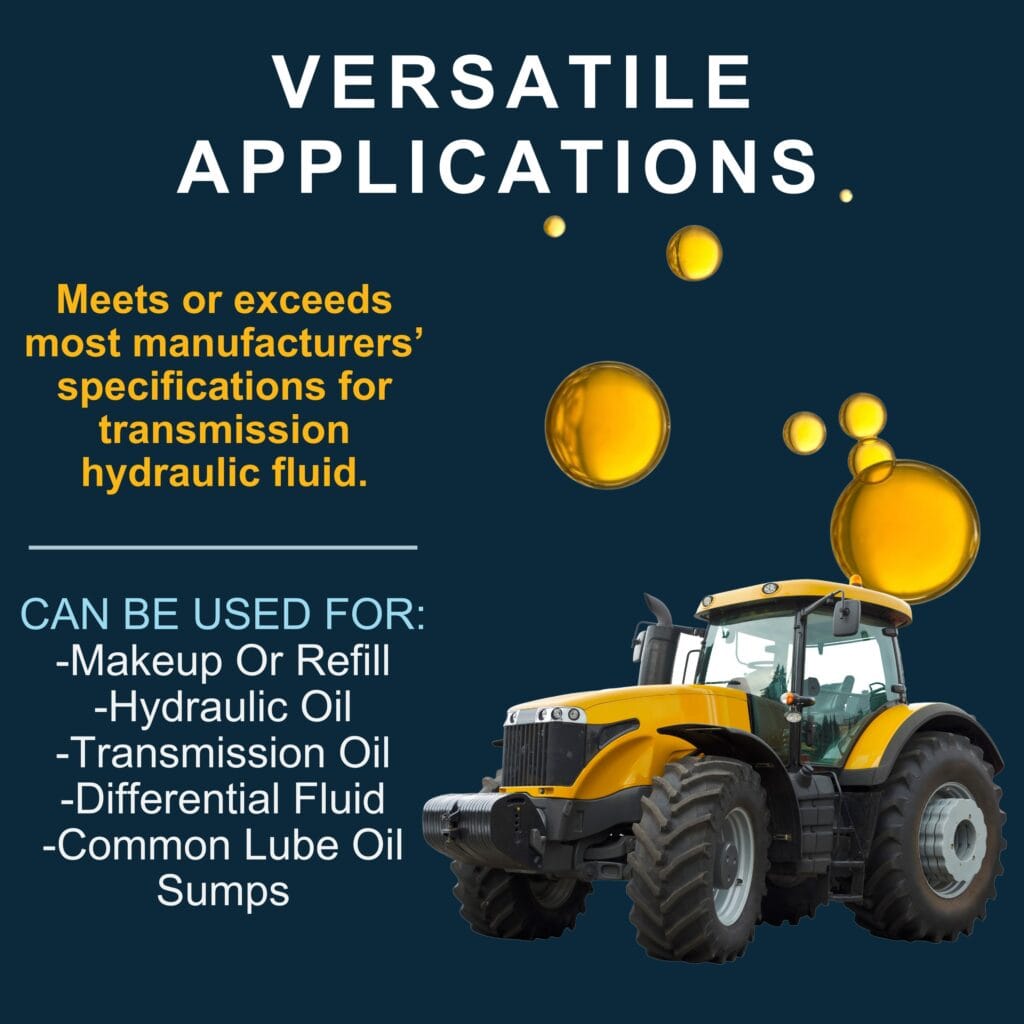

PRESIDENTIAL TRACTOR HYDRAULIC FLUID
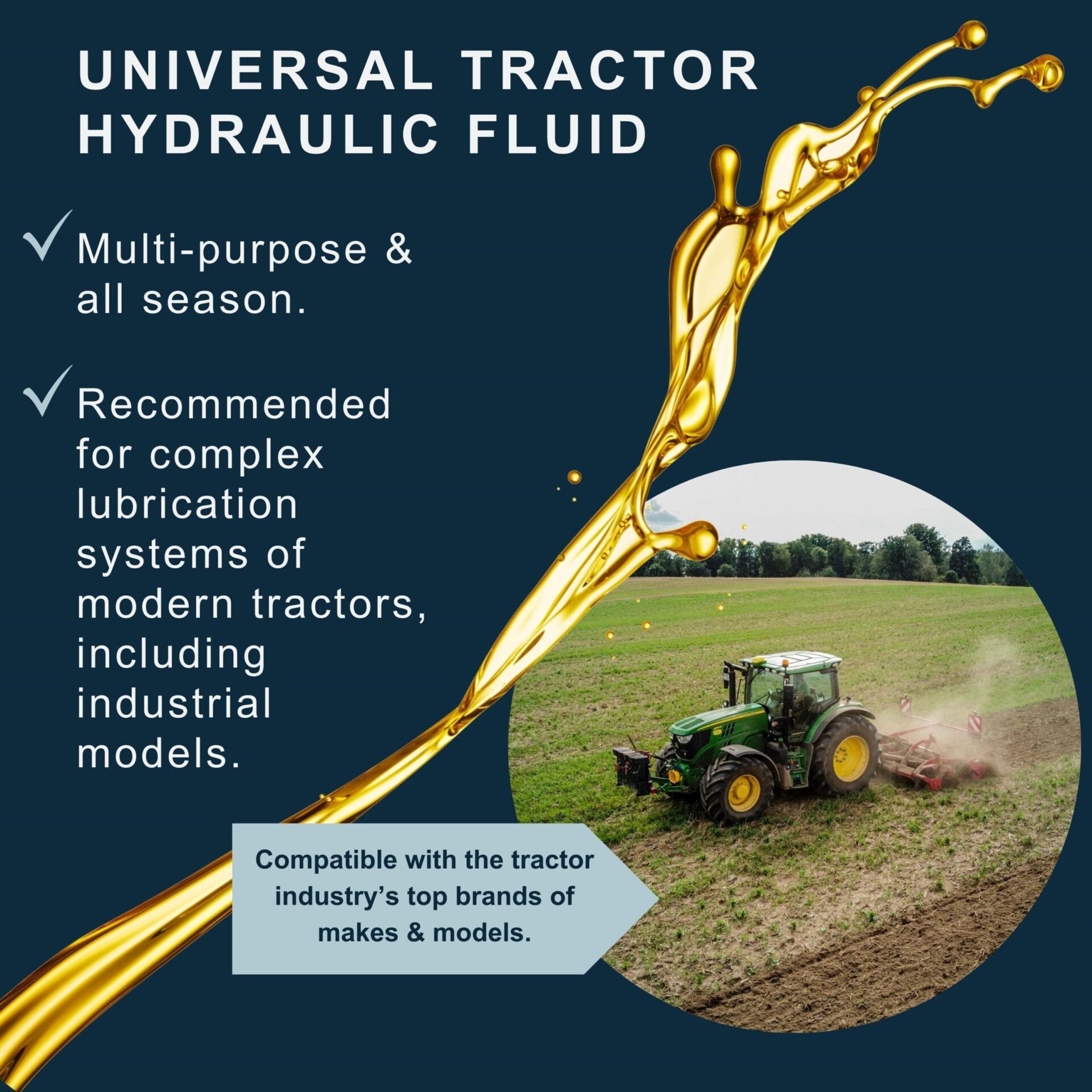
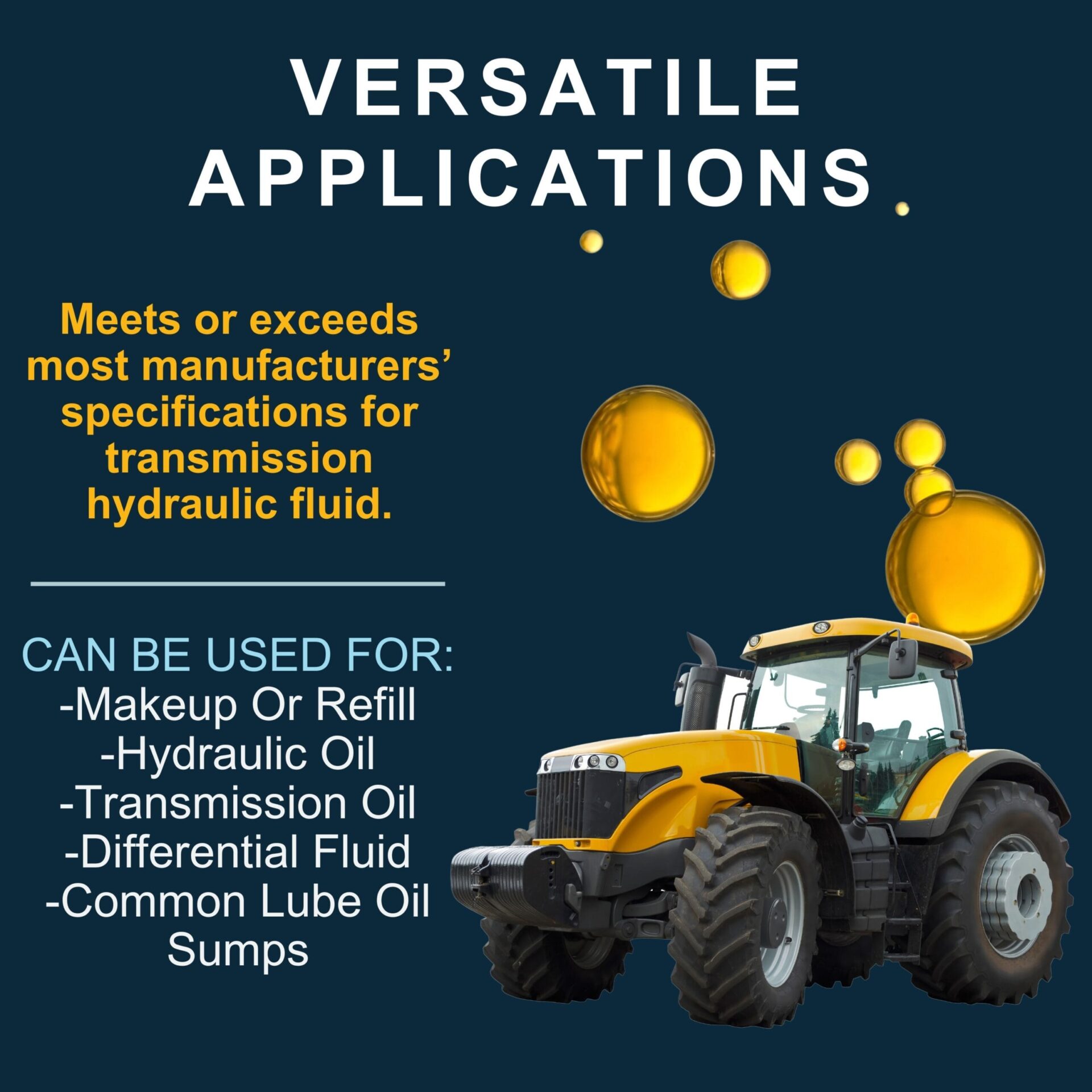
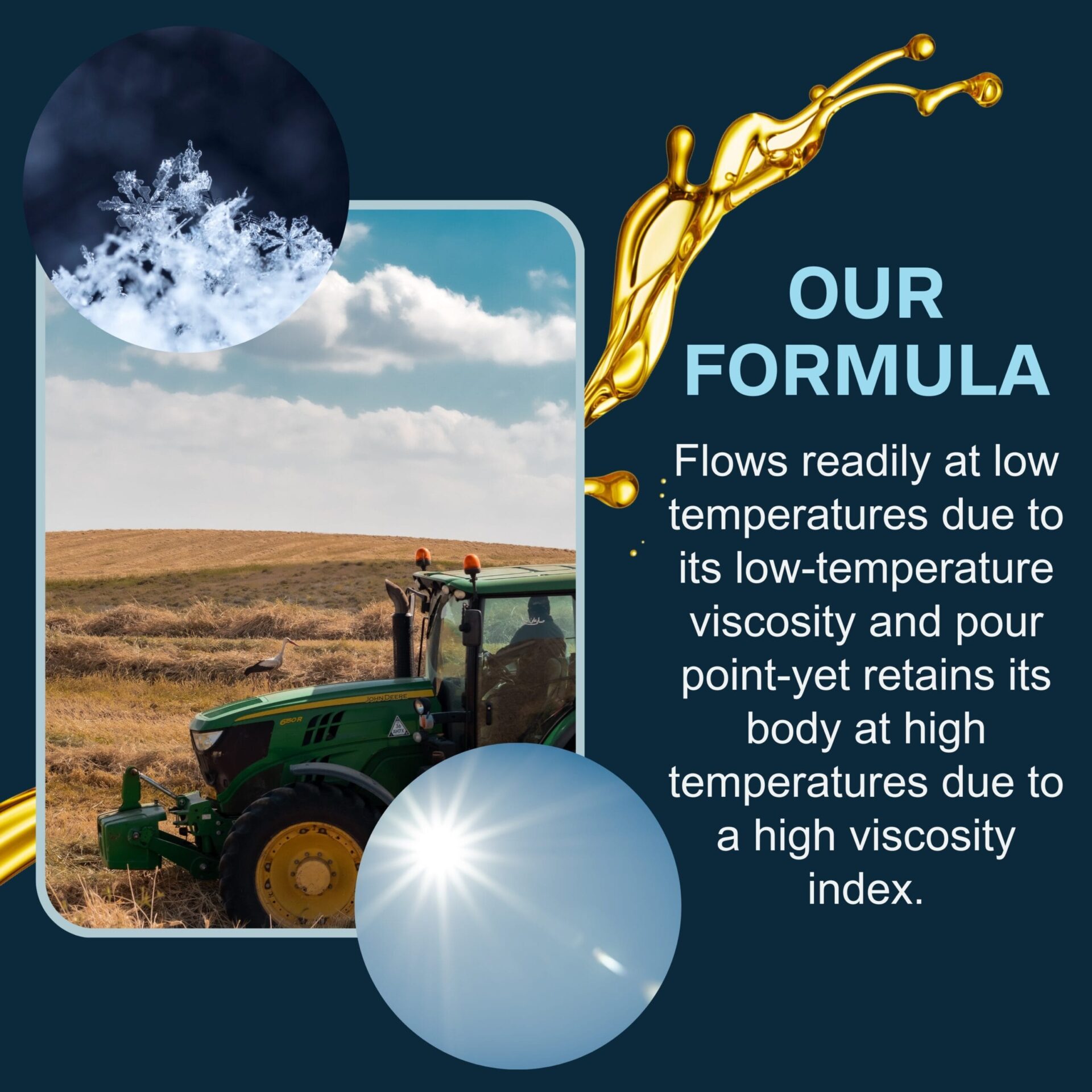
Presidential Tractor Hydraulic Fluid is a premium tractor hydraulic fluid engineered to meet the demanding lubrication requirements of today’s agricultural, construction, and industrial equipment. Specially formulated to perform in multi-functional systems, this high-quality transmission-hydraulic oil serves as a versatile lubricant for a wide array of components including transmissions, hydraulic systems, power take-offs (PTOs), differentials, torque converters, power steering units, and wet brake systems—all from a single fluid source.
Signs the fluid may need attention
Hydraulic fluid does not last forever. Heat, moisture, air, dirt, and heavy use gradually reduce its ability to protect components and transfer power smoothly. The tractor’s service schedule should be the main guide, but operating symptoms can also point to fluid or filter problems.
Warning signs include slow hydraulic response, whining pumps, jerky loader or hitch movement, brake chatter, hard steering, foaming fluid, milky appearance, leaks, or repeated low-fluid readings. These symptoms do not always prove the fluid is the only problem; they can also relate to filters, suction leaks, worn pumps, damaged seals, or mechanical faults. Still, fluid inspection is a sensible first step because it is central to system performance.
Good maintenance habits make a noticeable difference. Keep fill caps and funnels clean, store containers sealed, avoid introducing dirt during top-offs, and replace filters on schedule. Also inspect hydraulic couplers on implements, since shared equipment can move contaminated fluid from one machine to another.
Bottom line
Tractor hydraulic fluid is a multifunction fluid that powers hydraulic movement while protecting pumps, valves, gears, brakes, clutches, and other components when the tractor is designed for that type of service. It may be called tractor hydraulic oil, hydraulic/transmission fluid, or universal tractor fluid, but the label should always match the equipment’s required specification.
Color can offer helpful clues, especially if the fluid is milky, burnt-smelling, foamy, or gritty, but it should not be the only factor used to judge condition or compatibility. For reliable performance, choose the specified fluid, keep it clean, service filters on schedule, and treat hydraulic fluid as a critical part of the tractor rather than just another oil in the shed.