 Contact
 Account
Liquid Ice Melt Vs. Rock Salt
Introduction
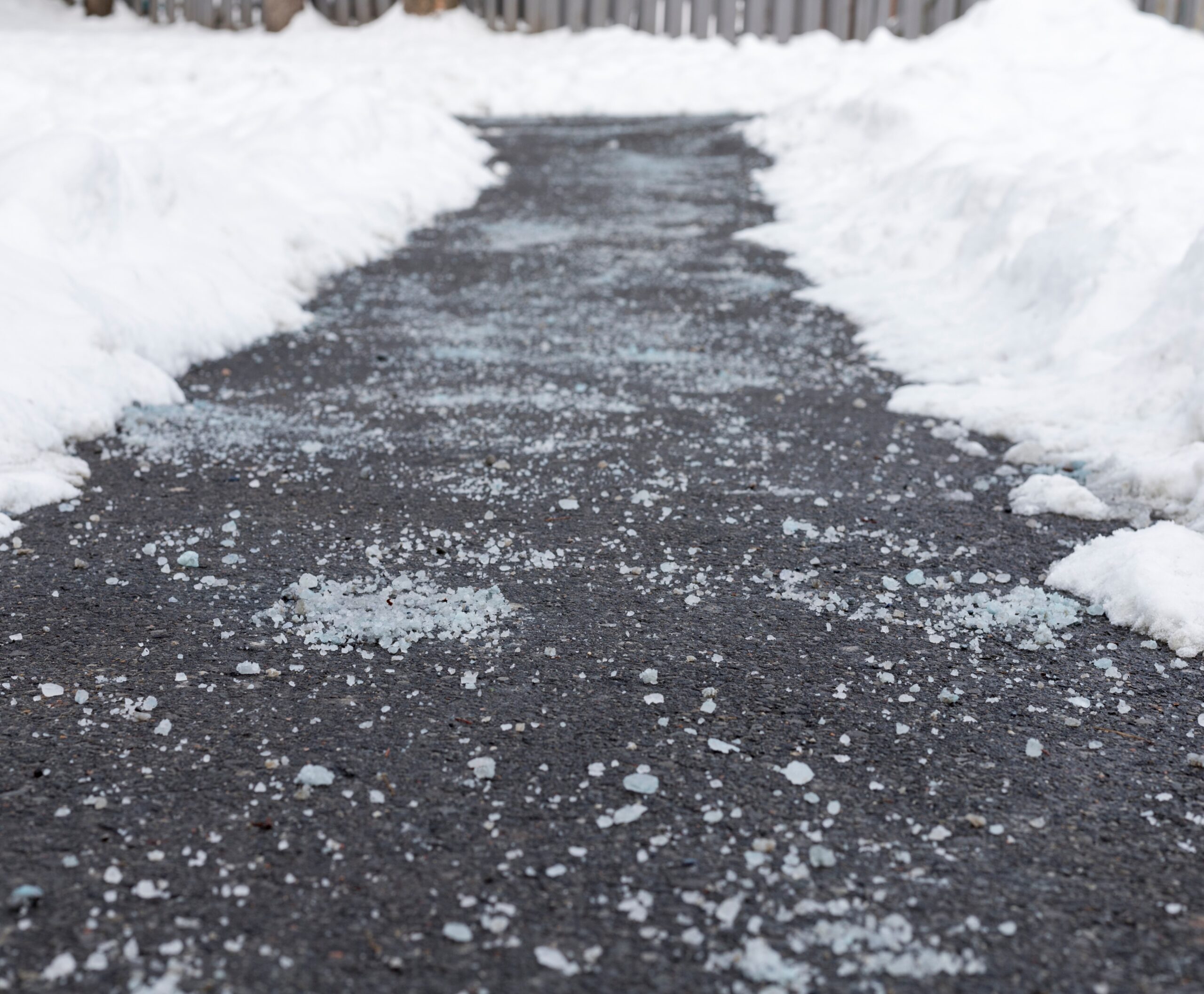
Liquid ice melt is a spray-applied deicing solution that helps prevent ice from bonding to pavement and treats existing ice. Unlike rock salt, its salts are already dissolved, allowing faster action without waiting for granules to form brine. Understanding the differences helps homeowners and property managers choose the right treatment, timing, and equipment.
What is liquid ice melt, and how does it differ from rock salt?
A liquid deicer contains dissolved chemicals that lower water’s freezing point. Rock salt is solid sodium chloride; it needs moisture to dissolve before it can melt ice. Liquid products skip that dissolving step, but their performance still depends on ingredients, concentration, and pavement temperature, not simply their liquid form. (stormwater.pca.state.mn.us)
This distinction matters when shopping for an ice melt liquid. A basic sodium chloride brine does not automatically outperform rock salt in extreme cold. Calcium chloride and magnesium chloride blends can work at lower temperatures, so compare formulas rather than assuming every liquid has the same capabilities.
Rock salt loses effectiveness below approximately 15°F pavement temperature. It melts less ice and works more slowly as temperatures fall. Check the surface temperature, not just the weather forecast’s air temperature, when deciding whether a treatment is suitable.
When should you use liquid deicer instead of rock salt?
Liquid deicer is particularly useful before snowfall, when it can help prevent snow and ice from bonding tightly to pavement. Rock salt remains useful after shoveling or plowing when temperatures suit sodium chloride. Liquids can also treat remaining ice after a storm; the choice depends on the formula and conditions.
Think about the job rather than choosing one format for every situation:
- Before a forecast storm: Use an appropriate liquid anti-icer to make later mechanical removal easier.
- After clearing loose snow: Treat remaining bonded ice with a deicer matched to the pavement temperature.
- Where granules scatter: Consider liquids or professionally prewetted salt to reduce bounce and keep more material on the intended surface.
- During continuing accumulation: Keep shoveling or plowing. Chemical treatment supports removal rather than replacing it.
Applying earlier is not always better. Traffic can wear away pretreatment, while rainfall and continuing precipitation can dilute treatment. Choose the application window around the forecast and inspect conditions throughout the event.
Presidential Liquid Ice Melt in practice
Presidential Liquid Ice Melt is a fast-acting, high-performance deicer effective down to -36°F. It works on contact and begins melting immediately. Its ready-to-use calcium chloride formula contains sodium, calcium, magnesium, and potassium chlorides plus a corrosion inhibitor.
It is suitable for commercial properties and home walkways, including sidewalks, driveways, parking lots, stairs, decks, entryways, loading docks, and high-traffic zones. Its stated benefits include no messy residue, no tracking indoors, reduced slip-and-fall risk, and less labor and cleanup, minimizing repeated shoveling and spreading salt or sand.
Application timing and coverage
Presidential Liquid Ice Melt is dual use: anti-icing pretreatment and post-storm ice removal. Apply hours before snowfall, up to 48 hours in advance, to prevent bonding; after the storm, apply to break up ice. A sprayer is the preferred application method.
Use these product-specific instructions:
- Measure the area. Apply 1 gallon per 1,000 square feet using a pressure sprayer for pretreatment. Listed coverage is up to 1,000 square feet per gallon; or 40 gallons per lane mile.
- Match the nozzle to the task. A straight-stream nozzle can melt through up to 4 inches of dry packed snow to pavement.
- Clear and reassess. Remove loosened accumulation and check for remaining ice rather than assuming initial melting means the entire route is safe.
These are product instructions, not universal rates for all liquid deicers. Overapplication can create slippery conditions; calibrating equipment helps avoid unnecessary product use.
Surface compatibility and environmental care
Presidential Liquid Ice Melt is compatible when used as directed on sealed concrete, asphalt, rubber, stainless steel, powder-coated surfaces, unfinished wood, brick, powder-coated steel, and sealed decks. Its formula will not damage landscaping, plants, or grass with proper application. Anti-corrosion and anti-rust properties support use around metal structures.
It is not recommended for concrete less than one year old or porous or painted surfaces. These restrictions matter even when neighboring surfaces are listed as compatible.
Compare the whole job, not just the container
Rock salt is generally inexpensive, while liquid programs require suitable spraying equipment. However, controlled placement and pretreatment can reduce wasted material and labor. Compare product consumption, equipment, application time, and cleanup rather than container prices alone.